Overview
About Me
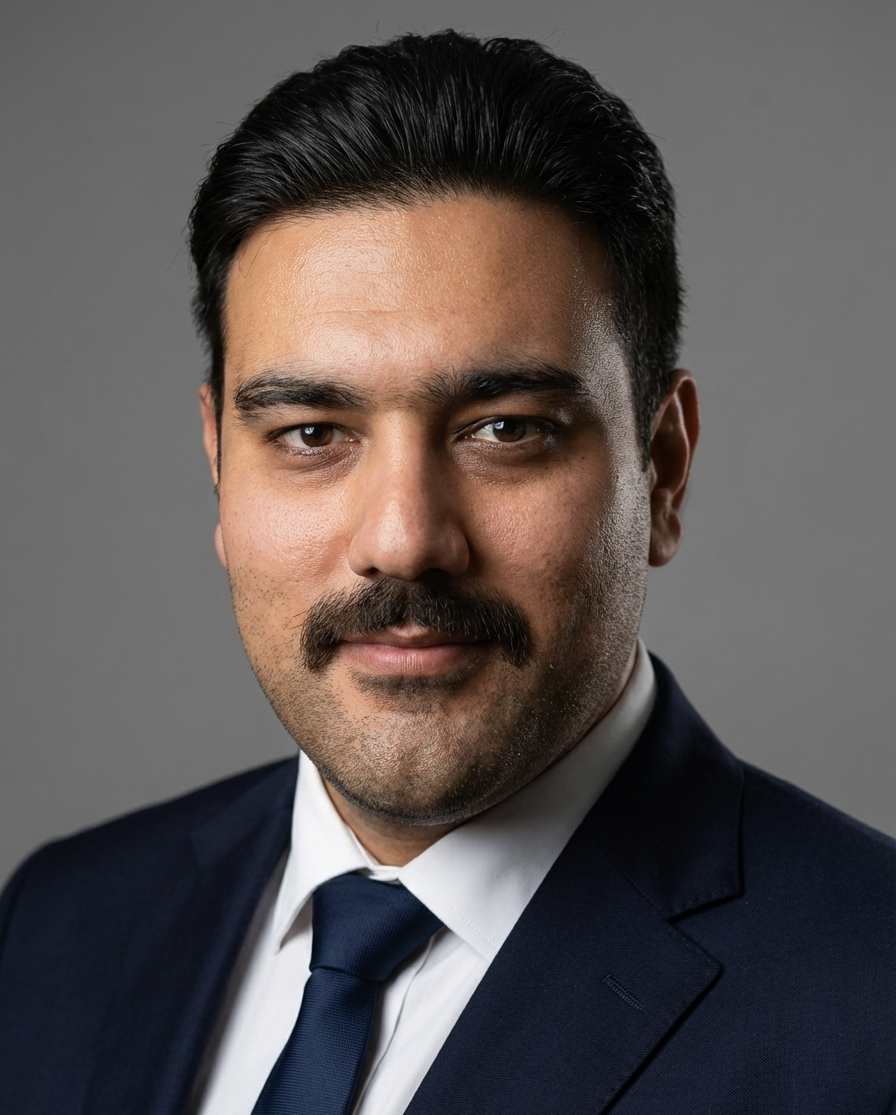
I am Dr. Mohammad Reza Eini, an Assistant Professor at the Warsaw University of Life Sciences (SGGW), specializing in Environmental Engineering and Water Resources. My career is dedicated to advancing global water security and planetary health under changing climatic conditions. My academic background includes a B.S. from the University of Tabriz, an M.Sc. from the University of Tehran, and a PhD with distinction from SGGW, providing a strong multidisciplinary foundation in hydrology, climate science, and advanced environmental modelling.
My research focuses on advancing climate-resilient water, agriculture, and ecosystem modelling through the integration of process-based hydrological models, agro-hydrological simulations, remote sensing, and AI/data-driven methods. I am particularly interested in improving the reliability of models such as SWAT, SWAT+, and SWAT-MODFLOW for assessing climate-change impacts on streamflow, drought, crop yield, soil moisture, water storage, nutrient transport, and ecosystem services across agricultural and transboundary river basins.
A central theme of my work is the development of hybrid modelling frameworks that combine physically based representations of hydrological and agricultural processes with machine learning, satellite observations, and climate projections. My recent research has expanded toward dynamic agricultural management under climate change, large-scale water-quality assessment, nutrient-load reduction, nature-based solutions, peatland dynamics, and water accounting for sustainable basin management.
Through international collaborations/fellowships with institutions such as PIK, UFZ, IRPI-CNR, and the Free University of Berlin, my research aims to support evidence-based decision-making for climate adaptation, sustainable water resources management, agricultural resilience, and planetary health.
Focus Areas
Research Interests
Process-Based & AI Models
- Watershed simulations with SWAT & SWAT-MODFLOW, emphasizing karstic and peatland hydrology.
- AI methods (ANN, SVM) fused with satellite data for drought and flood prediction.
Climate Adaptation
- Assessing extreme events and their influence on water availability and crop productivity.
- Scenario-building to guide adaptive management and risk reduction.
Water Management
- Basin-scale water accounting and policy frameworks for sustainable allocation.
- Socio-economic lenses on rural livelihoods, ecosystem services, and food security.
Remote Sensing & Policy
- Satellite precipitation, soil moisture, and evapotranspiration to refine water balance estimates.
- Co-designing science-based tools with stakeholders for climate adaptation.
Academic Path
Education
-
PhD (with distinction) Environmental Engineering, Mining, and Energy
Warsaw University of Life Sciences – SGGW (Oct. 2020 - Sep. 2024)
Thesis: Enhancing the accuracy of process-based and data-driven models for predicting drought.
-
M.Sc. Water Resources Engineering
University of Tehran - College of Aburaihan (Oct. 2015 - Sep. 2017)
Thesis: Development of comprehensive karstic watershed model to estimate water balance components.
-
B.Sc. Water Engineering
University of Tabriz (Oct. 2011 - Jun. 2015)
Toolbox
Technical Skills
Modeling
Process-based & data-driven hydrological models
Computing
R, Fortran, Python
Applications
ArcGIS, QGIS
Scientific Writing
Peer-reviewed papers & research projects
Data
Curating, cleaning, and managing complex datasets
Global Work
Fellowships
- Research Institute for Geo-Hydrological Protection, IRPI-CNR Perugia, Italy (Spring/Summer 2022)
- Potsdam Institute for Climate Impact Research – PIK, Potsdam, Germany (Spring/Summer 2023)
- Free University of Berlin - FUB, Berlin, Germany (Summer 2025)
- Helmholtz Centre for Environmental Research – UFZ, Leipzig, Germany (Fall 2023 - Fall 2025)
Impact in Motion
Projects
Current
- NORDBALT-ECOSAFE: Nutrient load reduction within safe ecological boundaries for the Nordic-Baltic region – Horizon Europe Project link
- Integrated water management in Lithuania (LIFE22-IPE-LT-LIFE SIP Vanduo) – CINEA Project link
- Adaptive Water Accounting for Sustainable Management of Central European Transboundary River Basins (AWA)
- DryAPS: Hybrid modeling with AI, process-based models, and satellites
Previous
- Integrated modeling of hydrological and agricultural aspects of droughts in the Odra River Basin under a changing climate (2020-2024)
Mentorship
Teaching Experience
- Warsaw University of Life Sciences (2020-present): Climate Change and Water Resources; Urban Hydrological Modeling; Data Science Methods; Hydrological Modeling
- Ale-Taha University, Tehran, Iran (2017-2020): Advanced Engineering Hydrology, Mathematical Models in Hydrology, Groundwater Hydrology, Applied Hydrology
Selected Work
Selected Publications
Recent highlights from more than three dozen peer-reviewed papers.
- Eini, M. R., Salmani, H., Ghezelayagh, P., Nodeh, M., & Piniewski, M. (2026). Rising heavy precipitation extremes in Central European river basins under a high emission scenario. Scientific Reports.
- Piniewski, M., Čerkasova, N., Plunge, S., Strauch, M., Schürz, C., Braun, P., Chiaradia, E. A., Eichenberger, J., Eini, M. R., Farkas, C., Forio, M. A., et al. (2026). Enhanced crop calibration for SWAT+: evaluating water, sediment and nutrient impacts across ten European catchments. Environmental Modelling & Software, 196, 106794.
- Delavar, M., Morid, S., Zaghiyan, M. R., & Eini, M. R. (2025). Climate change and intensified irrigation as drivers of water imbalance in a large dry basin with two vanishing lakes in Iran. Environment, Development and Sustainability.
- Kalaki, M. F., Delavar, M., Farokhnia, A., Morid, S., Kuchak, V. S., Hajihosseini, H., Shahbazi, A., Nourmohammadi, F., Motamedi, A., & Eini, M. R. (2025). An ensemble multi-model approach for long-term river flow forecasting in managed basins of the Middle East: Insights from the Karkheh River Basin. Journal of Hydrology, 132846.
- Tomczyk, A. M., Piniewski, M., & Eini, M. R. (2025). Past and future changes in maximum air temperature and cold days in winter in Poland. Acta Geophysica.
- Ghezelayagh, P., Eini, M. R., & Grygoruk, M. (2025). Assessing carbon accumulation through peat vertical displacement: The influence of climate and land use across diverse peatland characteristics. Science of The Total Environment, 958, 178132.